About Dyslexia
What is Dyslexia?
Dyslexia is a neurologically based, often familial, learning disability that encompasses a cluster of symptoms, that results in people having difficulties with specific language skills, particularly reading. Students with dyslexia often experience difficulties with both oral and written language skills, phonological processing, reading, writing, spelling, handwriting, and sometimes in arithmetic.
International Dyslexia Association’s Definition of Dyslexia
Common Signs of Dyslexia
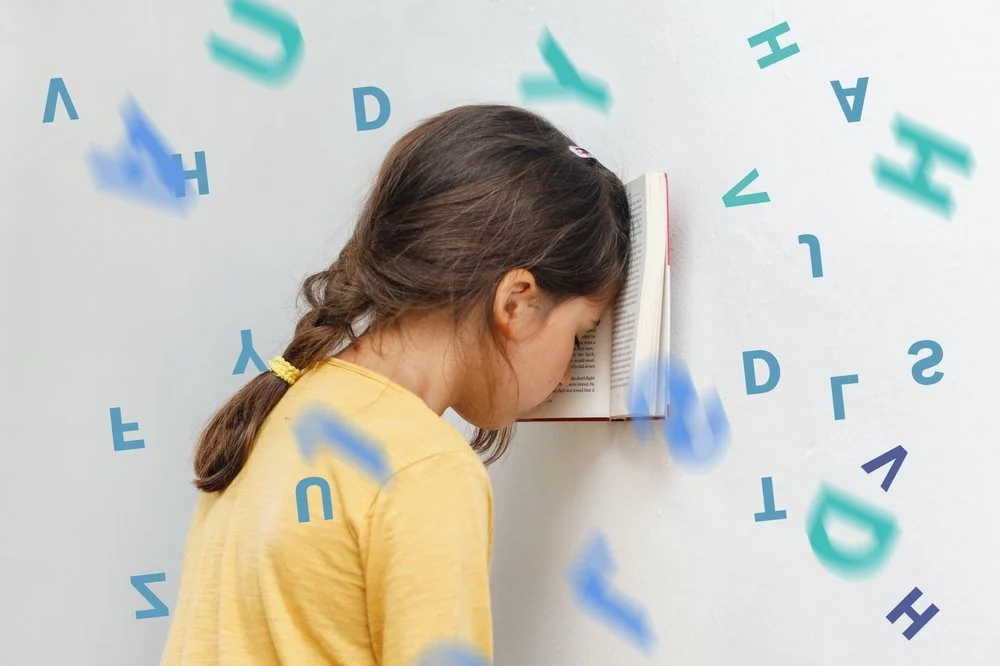
Many signs of dyslexia are evident before a child begins to read; as a child becomes older, the signs become more apparent. The symptoms vary in extent and severity.
Difficulty with Reading – struggles with decoding words, reads slowly, and may have poor reading accuracy
Terrible Speller – makes frequent spelling errors, often with letter reversals or phonetic substitution
Difficulty with Sequencing – struggles with understanding and recalling the order of events, numbers, or steps in process
Left-Right Confusion – can affect navigation and following instructions involving spatial orientation
Trouble with memorizing math facts
Delayed speech
Difficulty learning to tie shoes
Changes words such as Spaghetti to “gespetti,” Elizabeth to “Ebit”
Does not recall a word and makes up words on the spot, or calls it a “thingamagiga

Overcoming hurdles & nurturing success
Strength & Brilliance
While facing challenges of dyslexia that can seem daunting, know that the young minds of these children possess an unparalleled resilience and creativity.
Their minds, wired differently, harbor innovation, out-of-the-box thinking, and boundless imagination. By seeing your child’s dyslexia as simply another way of learning and thinking, and with the right tools and strategies, children with dyslexia can unlock their full potential, showcasing brilliance in areas beyond reading and writing.
Strong visual processing capabilities with great reasoning and problem-solving skills
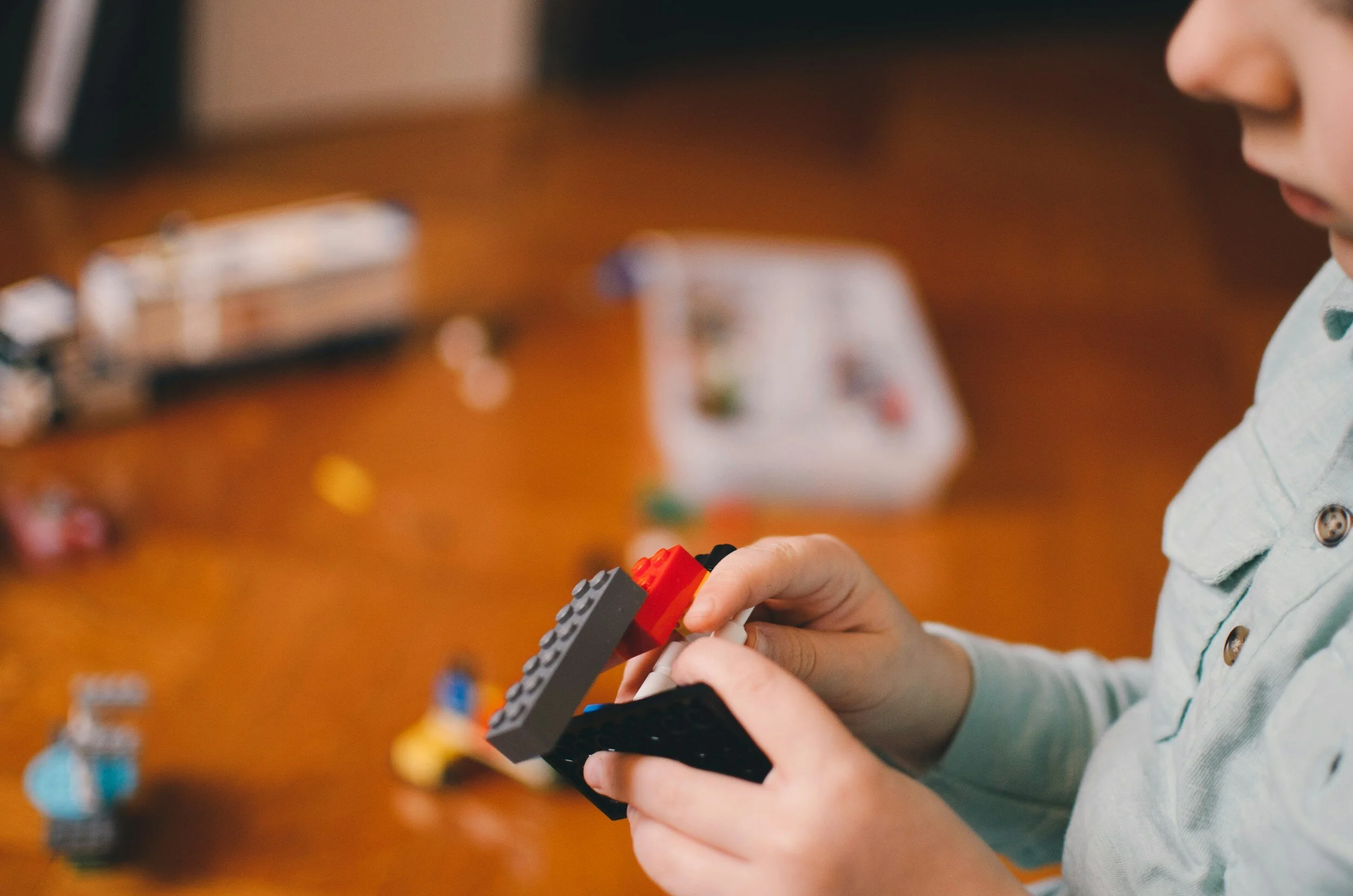
Three-dimensional spatial reasoning and mechanical ability
Perceive relationships like analogies, metaphors, paradoxes, similarities, differences, implications, gaps, and imbalances
Able to see outside the box to solve intricate problems
Understand abstract information in terms of specific examples
Some people with dyslexia are good at visualizing space and have quick reflexes which are important to excel in sports
Strong communication skills
Compassion and empathy
FAQs
-
According to the International Dyslexia Association, 10-20% of the population has a language-based learning disability. Dyslexia is among one of the most common causes of reading, writing and spelling difficulties.
-
In Preschool
Delayed speech
Mixing up the sounds and syllables in long words
Chronic ear infections
Stuttering
Constant confusion of left versus right
Late establishing a dominant hand
Difficulty learning to tie shoes
Trouble memorizing their address, phone number, or the alphabet
Can’t create words that rhyme
A close relative with dyslexia
In Elementary School
Dysgraphia (slow, non-automatic handwriting that is difficult to read)
Letter or number reversals continuing past the end of first grade
Extreme difficulty learning cursive
Slow, choppy, inaccurate reading
Guesses based on shape or context
Skips or misreads prepositions (at, to, of) - ignores suffixes
Can’t sound out unknown words
Terrible spelling
Often can’t remember sight words (they, were, does) or homonyms (their, they’re, and there)
Difficulty telling time with a clock with hands
Trouble with math
Memorizing multiplication tables - memorizing a sequence of steps - directionality
When speaking, difficulty finding the correct word - lots of “whatyamacallits” and “thingies”
Common sayings come out slightly twisted
Extremely messy bedroom, backpack, and desk
Dreads going to school
Complains of stomach aches or headaches - may have nightmares about school
You can learn more about Warning Signs for Dyslexia by going to Bright Solutions for Dyslexia Website:
-
While a child is being tutored using an Orton-Gillingham-based system, that child will also need Classroom Accommodations.
Accommodations are not a change in the curriculum. Instead, they are a slight change in the way a regular education teacher:
Presents new information
Helps students master new skills
Tests students to ensure they have mastered the new skills
These accommodations allow dyslexic students to master the same curriculum as everyone else and prove their knowledge—even though they are not (yet) reading, writing, or spelling at grade level.
Please contact me for a handout for Classroom Accommodations for Dyslexic Students.
-
With my specialized dyslexia intervention, parents and teachers often notice improvements in their child’s reading abilities as early as three months into instruction. It’s important to note that the instruction begins with the most commonly used and essential words, gradually progressing to the more complex aspects of the English language. The most significant progress in a child’s tutoring typically occurs within a year of instruction, as they start to read without sounding out every word. However, this isn’t the endpoint, as stopping at this stage would mean the child has only mastered half of the reading rules necessary for full reading proficiency. Without continuing the instruction, they’ll only be able to read words adhering to the rules they’ve learned.
-
Although dyslexia is lifelong, individuals with dyslexia frequently respond successfully to timely and appropriate interventions.
[International Dyslexia Association]